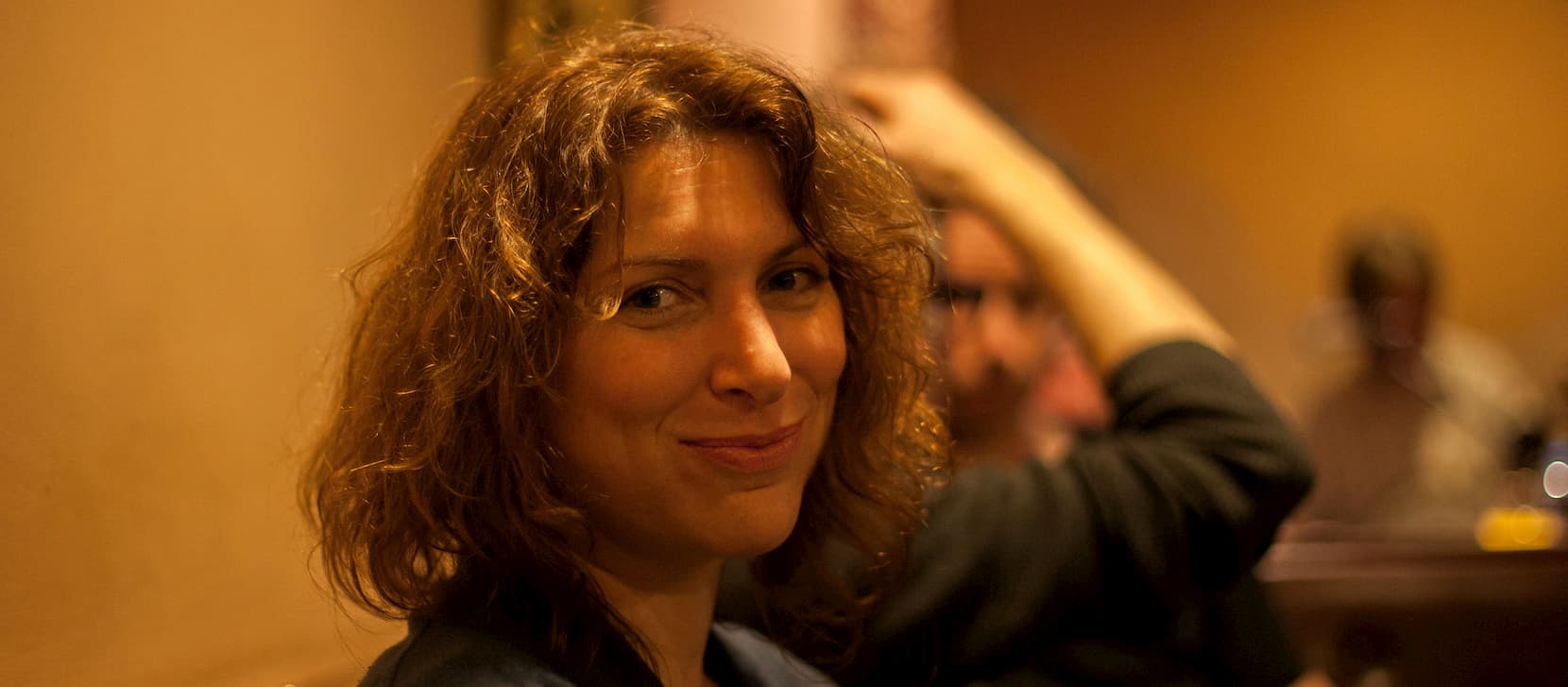
After This

Annie Dorsen

Copyright information:Stephen Dodd

An overwhelming stream of archival footage takes centre stage in After This, a new performance by theatre director Annie Dorsen. At its heart is a remarkable archive compiled in 1999, just before the turn of the millennium. Three performers interact live with a cascade of overlapping images and sounds. At times the material sparks recognition; at others, it seems to carry a warning. Meanwhile, Dorsen grapples with larger questions: what do we remember from the past? What do we forget, consciously or unconsciously? Do we feel surprise when we look back, or do we recognise continuities that persist into the present? After This continually moves between then and now, between nostalgia and hindsight.

Archive of television footage

After This is built around an extraordinary archive of television footage from 1999. That year, the world was gripped by anticipation of the new millennium. The twentieth century was ending and the twenty-first was about to begin. The mood was not only one of excitement. There was also a near-apocalyptic fear that the so-called “millennium bug” would bring society to a halt. Computers were expected to fail when dates switched from 99 to 00. “Y2K” dominated the news.


Inspired by the hype and anxiety surrounding the millennium, a computer science student in the United States created a programme that recorded every mention of the millennium transition on the four major American television networks. The result was a collection of hundreds of fifteen-minute clips. Seemingly random on their own, together they form a portrait of the world, and of the United States in particular, between July 1999 and January 2000.


About the performance

The millennium archive was created with the sense that the world stood on the brink of something momentous. More than twenty-five years later, Annie Dorsen looks back in After This. The feared computer bug never materialised, yet the archive reveals a world that was undeniably at a turning point.


On stage, the archive comes to life. Three performers give it a voice and a form, responding live to its relentless flow of images. A familiar world unfolds: newsreaders, weather forecasts, game shows and sitcoms. Yet beneath the surface, unsettling signals emerge. Warnings that perhaps can only be recognised in hindsight.


In 1999, for example, the repeal of the Glass-Steagall Act removed the strict separation between commercial and investment banking, laying the groundwork for the financial crisis of 2008. EgyptAir Flight 990 crashed; years later, Osama bin Laden would claim that the incident inspired his idea of using passenger aircraft as weapons. We see demonstrations against globalisation and the newly established World Trade Organization. No fewer than eight mass shootings make the news. In Russia, Boris Yeltsin is succeeded by a little-known Vladimir Putin. And on Larry King Live, Donald Trump announces his intention to run for president, the first step on a path that would eventually lead to his election in 2016.


Dorsen asks how the world has changed since 1999. “How did we get here?” she wonders, echoing a question asked by many of her fellow Americans as they look at the social and political state of the United States today. Has the world really changed so suddenly? Or has it remained fundamentally the same? Can we trace a    thread through this archive of images? And who exactly are “we”? After This searches for answers within the whirlwind of a reanimated archive.

Read less

dates

Sat June 19 3:00 PM

prices

  • default from € 28
  • HF Young from € 21,50

information

  • English surtitles: Dutch

  • 1 hour 10 minutes

more info

Credits

direction Annie Dorsen text Annie Dorsen Ryan Holsopple programming Ryan Holsopple sound design Ian Douglas-Moore video design Kate Howard toneelbeeld Jasmit Rangr lighting design Ruth Waldeyer dramaturgy Miriam Felton-Dansky performers Hai-Ting Chinn, isabel crespo pardo, Jeffrey Gavett producer Natasha Katerinopoulos