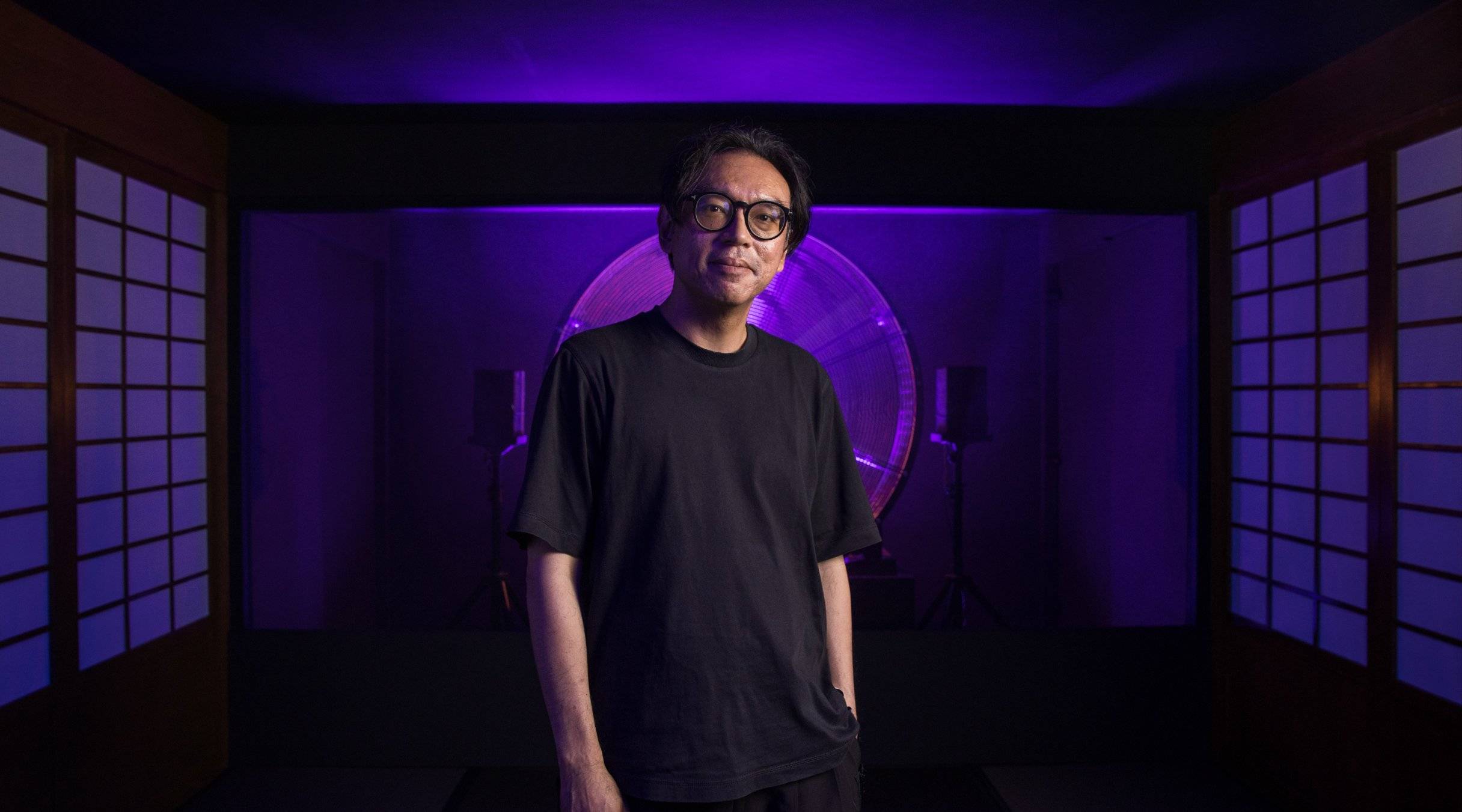
This year’s Holland Festival associate artist is visual artist and performance maker Ho Tzu Nyen (Singapore, 1976). His work is steeped in numerous Eastern and Western cultural references ranging from art history and philosophy to cinema, music and theatre, seamlessly blending mythical narratives with historical facts, using a wide variety of media.
Central to his body of work, is a long-term investigation of the plurality of cultural identities in Southeast Asia: A Critical Dictionary of Southeast Asia. This year’s festival will feature his latest work, T for Theatrestate, alongside various other works by him, as well as discussions, events and encounters. Ho Tzu Nyen aims to ‘create fields in which different worlds and perspectives can coexist and remain in motion – where differences do not have to be resolved.’
You’re no stranger to Holland Festival; your work has been part of the festival program before. What was your first reaction to the possibility of becoming associate artist in 2027?
‘When this collaboration was first proposed, I immediately thought of it as a different way of working. It matters to me that this is the continuation of a relationship and a friendship, built through different presentations and co-productions. The associate artist role creates the possibility for both the festival and the artist to go further and deeper, and to weave together different strands of my practice over time.’
You grew up in Singapore, in a mix of cultural influences. How has this influenced you?
‘My grandparents migrated from China to Singapore, so I am a third-generation Chinese Singaporean. On my father's side the family was Hainanese, and on my mother's side Cantonese, so even within Chinese immigrant culture there were already different languages and traditions. More broadly, growing up in Singapore meant growing up among different cultures, religions and languages. From quite a young age I had a sense that different worlds could coexist very closely without necessarily being fully accessible to one another. What especially sparked my curiosity were differences that I couldn't entirely grasp, but in which I could still sense some kind of resonance or connection. That feeling – that something can remain different or partly inaccessible and yet still resonate with you – became very important to me later.’
Your ongoing multi-part project is called The Critical Dictionary of Southeast Asia, and you completed a master's degree in Southeast Asian Studies at the National University of Singapore. What does that part of the world mean for you?
‘My interest in Southeast Asia centres around a very basic question: what is Southeast Asia? What makes it a unit at all? The region has no single language, religion, political system or cultural tradition that binds it together, and even its geographical boundaries have shifted historically. It has been continually produced and reorganized through colonialism, war, scholarship, political boundaries and postcolonial institutions, rather than simply existing as a fixed or natural entity. The Critical Dictionary of Southeast Asia takes many forms, but at its core it is an attempt to engage with the different histories, religions, political formations and imaginaries of Southeast Asia without reducing them to a single identity.’
What are your references and where do you get your material from?
‘A lot of my work comes from reading philosophy, anthropology and history. I try to look at something through multiple perspectives, while also questioning those lenses, because every way of looking reveals certain things while obscuring others. Ultimately, gathering these perspectives is a way of immersing myself in a world until I can begin to tap into its imaginary – not only what happened, but what it dreamt, feared, desired, or might still become. History for me also contains unrealized possibilities, alternative timelines and paths that might have forked elsewhere. These worlds begin to coexist with others I have already inhabited through memories, books, films, music and dreams. Rather than beginning with a story and constructing a world around it, I try to immerse myself deeply enough in a world that its images, forms and stories begin to emerge from within it.
Southeast Asia seems politically extremely complicated, with countries having different shapes and names in different periods. What role does this shifting of political entities play in your work?
‘Many of my works revolve around shapeshifting. In The Critical Dictionary of Southeast Asia and One or Several Tigers, which Holland Festival presented in 2018, I was interested in the were-tiger: a human who can transform into a tiger. Another shapeshifter appears in The Mysterious Lai Teck (programmed in Holland Festival 2020, cancelled due to the pandemic) about the leader of the Malayan Communist Party who was also a triple agent working for different colonial and occupying powers.
What interests me is the question of continuity within transformation. After something changes its shape, why do we still recognize it as the same being, rather than as something entirely different? What persists through the transformation? I think this is also a useful way of thinking about Southeast Asia, where identities and political formations have continually changed shape.’ 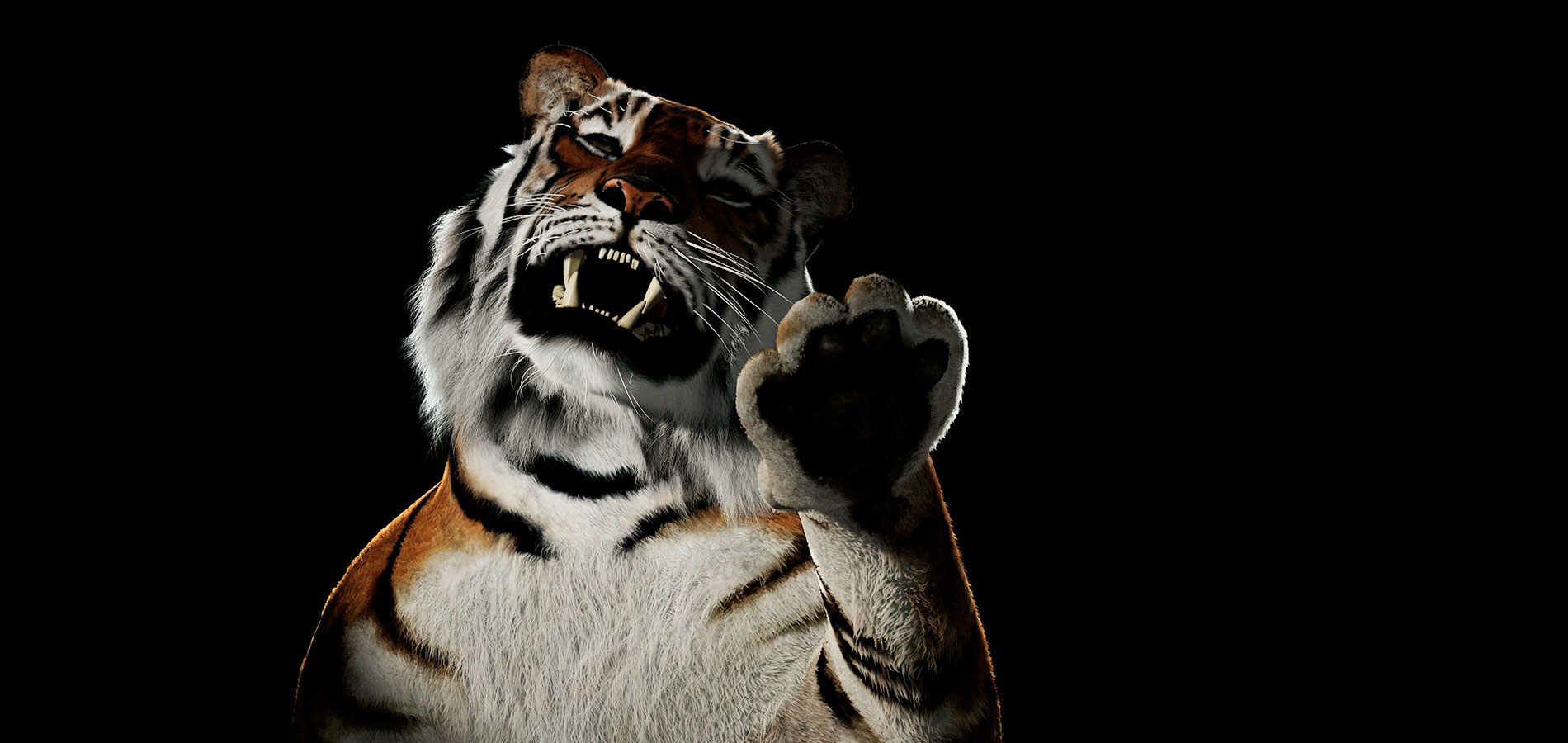 One or Several Tigers courtesy of Ho Tzu Nyen
Your work is very versatile, combining different art forms, genres, styles and technologies. How do you decide which media or components to use?
‘Earlier in my career I was very open to moving between different media. I worked in film and theatre without having formal training in either. I still constantly change the way I work. I'm interested in how media themselves are changing, because the medium transforms the subject just as much as the subject determines the medium. It is almost as though the subject matter has to suggest its own form and medium. For me, a work is close to completion when the form and the subject become so integrated that they begin to amplify one another in ways I hadn't foreseen.’
The installation Phantom of Endless Days was the last time you worked with actors. What changed?
‘The narrative of this work followed five groups moving through the same forest: Japanese soldiers, occupied Singaporeans, Communist guerrillas, British commandos, and a group of magical beings drawn from Malay cosmologies. It was the last major work I shot with a camera, and somehow, I couldn't finish the film for more than ten years. I think I was already struggling with the realism. I love cinema, but the people I had filmed never quite appeared to me as ordinary human figures. Ten years later, AI processes finally gave me a way to transform the material. I began introducing an artificial wind into the images, which disturbed their surfaces and dissolved the outlines of bodies. The figures started to lose their weight and solidity, becoming almost like hair, cloth or vapor moving through the forest. That was when I understood what had been missing. AI allowed the figures to become what they had always been for me - ghosts. Once that happened, I could finally finish the work.’
The Dutch feature in your work on more than one occasion, including in the installation P for Power. Can you talk about your relationship with the Dutch?
‘My first relationship with Dutch culture was through painting. There was a period when I travelled around Europe looking at paintings, especially Vermeer and Rembrandt, and later Mondrian. Svetlana Alpers' book The Art of Describing is about the pictorial tradition of seventeenth-century Dutch painting, of which this stayed with me: the image can become a field of intensified observation, where many things coexist and attention can move between them. More recently, the Dutch philosopher Spinoza has become very important to me. What interests me especially is his idea of power not simply as domination or authority, but as a capacity to act, and how encounters can increase or diminish that capacity.
What is P for Power about?
‘The work has five AI-generated child protagonists, and around them I brought together fragments of Singapore life: the public housing such as where I grew up, as well as memories of television, songs, films and other images from that period. P for Power moves between these different senses of power: power exercised over others, but also power as capacity – our ability to act, to be affected, and potentially to amplify one another's capacities. The children are important because they bring another sense of power into the work: power as potentiality, as something that has not yet taken a fixed form.’
Can you tell us a bit more about how you work with AI and why? What do you consider to be the advantages and disadvantages?
‘There are two main ways I use AI. The first is structural: I sequence my films algorithmically. Instead of editing according to a single timeline, my programmer and I establish certain parameters and allow the system to assemble the work differently each time, using different combinations of images and sounds. What interests me is that although each version may look very different, I can still sense a kind of underlying shape that persists across them. The second way I use AI is generatively, to produce images and sometimes voices.
What I find liberating is that AI releases me from the idea of “the one”: one definitive sequence, one perfect version, one way in which a story has to unfold. Chance enters the process, but within certain rules and constraints. It makes me think about composition very differently. Instead of composing a single finished manifestation, I am composing a field of possibilities from which many different manifestations can emerge.
At the same time, there are enormous questions surrounding the larger political and infrastructural realities of AI and how these systems will be deployed. For me, the response cannot simply be to stand outside them. I feel I need to continue engaging with this new logic because it is transforming the infrastructures within which we all live, far beyond art. I am interested in working from within that complexity—both its possibilities and its problems.’
Is there not a danger of stereotyping and exotism in AI?
‘Working with AI is a constant negotiation with the cliché. For me AI stretches the limits between the archetype and the stereotype. The stereotype is the cliché, but the Jungian archetype is much more meaningful. AI creates imperfections and randomizations because of glitches. These are not entirely random; there is a system behind them and it’s possible to sense a coherence to why certain things glitch. A kind of synchronicities coexist in AI processes and stories. These open us up to multiple dimensions all at the same time, and this multiplicity of different references and worlds in which something is connected, interests me very much. The more different worlds coexist in it, the stronger and more compelling they become.’
What does AI mean in terms of authorship/ownership? And what are the ethical implications of working with AI?
‘I'm not very attached to authorship. I think of myself less as an origin than as a conduit. Images, sounds, ideas, clichés, other people's works – all these things pass through me, and I distort, combine and transmit them. In that sense, AI is another kind of conduit, only vastly larger and more opaque.
Of course, that opacity is also where the ethical questions begin: whose images, whose labor, whose memories are passing through the machine, and who owns the machine they pass through?
Artistically, I'm interested in making authorship porous. I set up conditions, rules and materials, but I don't want to determine everything that happens. I want the work to become slightly foreign to me –to acquire behaviors I didn't put there.’
T for Theatrestate, the central work at Holland Festival (and coproduction), is based on the idea that power exists by being performed. Politics does not operate behind the scenes; it is the staging itself. Can you tell us more about the work and what inspired you?
‘When I first started thinking about T for Theatrestate, I knew I wanted to work with two screens and an empty space – perhaps a stage – between them. The work gradually began to take shape around this structure. At the same time, a key part of T for Theatrestate is that the work will be assembled by algorithms and will unfold differently in real time. What happens is never completely under my control. I am interested in giving this process of unfolding a certain necessity of its own – as though the work is changing for itself, while an audience witnesses that transformation taking place.’
What about Balinese culture and history inspired you for this work?
‘It began with anthropologist Clifford Geertz’ The Theatre State in Nineteenth-Century Bali. He describes a form of political power in which spectacle is not simply something used to represent power – the spectacle itself is power. Another important reference was Gregory Bateson, who described a certain “steady state” in Balinese culture: constant movement and variation without necessarily building towards a dramatic rupture. Visually, I am drawn to the flatness and layering of forms such as shadow puppetry and Balinese painting.
What interests me most about Bali is perhaps its extraordinary capacity to generate images and concepts that coexist. T for Theatrestate will similarly have no single narrative event, but many events and temporalities unfolding and coexisting at once.’
What does it mean if we as a Performing Arts Festival show work without live performers?
‘I think it is an invitation to rethink what we mean by liveness. Does it have to contain a live human body to be alive as performance? For me, liveness has more to do with something unfolding in real time that is not completely under our control – the possibility of deviation, interruption, surprise or failure. That is the kind of liveness I am interested in, and I want to explore what besides the human performer can produce it. In T for Theatrestate, algorithms continually generate new relations between the front and back layers, together with smoke, wind and light. The performance is happening because these elements are encountering one another in real time.’
How do you see the role of your artistic practice in the world as it is today?
Perhaps the role of art for me at this moment in time is to channel some of the forces at work in the world in all their heterogeneity. I want to create fields in which different worlds and perspectives can coexist and remain in motion – where difference does not have to be resolved. Not simply so that we can survive the complexity of the world, but so that we might still find ways to sing of it, in all its difference.’
What does this role as associate artist mean for you, and what do you hope to bring to the festival and its audience?
‘It is interesting to think about the main lines of interest to the festival this year – AI, post-colonialism and archiving – not in isolation, but together, in relation to each other. For me the first thought is often: how to intertwine? For example: How would AI respond to questions that are still on the table, about justice and equality and representation, etcetera? It's interesting to discuss these things with the festival team to find interconnections and to weave and test and stretch them out by adding strange combinations.
For me as an artist, being associate artist also expands the bandwidth of what I can bring into the festival. I can think not only about my own works, but about the artists, musicians and thinkers who have influenced me, as well as collaborators who have become part of my practice. Many of them are artists whose work I am deeply interested in. I think collaborators such as Tomoyuki Arai, my dramaturg in quite a few projects, will become part of the festival. We will surely have more collaborators in different disciplines and forms.’ [The full program will be finalized in December and announced on 2 March 2027]
How do you think or hope a European audience understands and experiences your work?
‘One could think of Southeast Asia as being very different from the Netherlands and the Holland Festival. And yet it is not, because they are tied together through histories of colonization, including Dutch and Balinese histories.
If I speak from my own experience, it is often most interesting to encounter a work of art that at first seems completely alien. After going through it, staying with it, sensing its inner coherence, it begins to show its own shape. It is not defined by my prejudice or my conventional way of understanding, because the work exists according to its own logic. Those are some of the most beautiful experiences for me.
I hope being associate artist can open up some of the larger world around the works – the relationships, influences and exchanges from which they emerge – and allow the audience to encounter not just individual works, but something of the network of people and ideas that make them possible.’
Interview by Evelien Lindeboom, commissioned by the Holland Festival