As the dancers shuffle across the space, they step on the orange ping-pong balls, scattered on the floor, each one bursting open with a bang. The set is minimal: an orange emergency light casts changing shadows of the dancers, a fan in every corner of the stage and low-hanging lights on either side. The orange theme extends to the dancers' costumes, which consist of multiple layers of grey and orange, an orange necklace and a mesh mask covering half their face.
The music consists of polyrhythmic drum sounds and electronic rhythms. The live composition by artist CHASSOL adds to the dynamic feeling of the choreography. Choreographer Ana Pi (1986, BR/FR) focuses her work as an Afro-diasporic dance and urban dance researcher, teacher and contemporary dancer around topics like transit, belonging, memory and colour. Previously, I had seen her first documentary NoirBLUE–les déplacements d’une danse, where she travels through the African continent to reconnect with her origins.
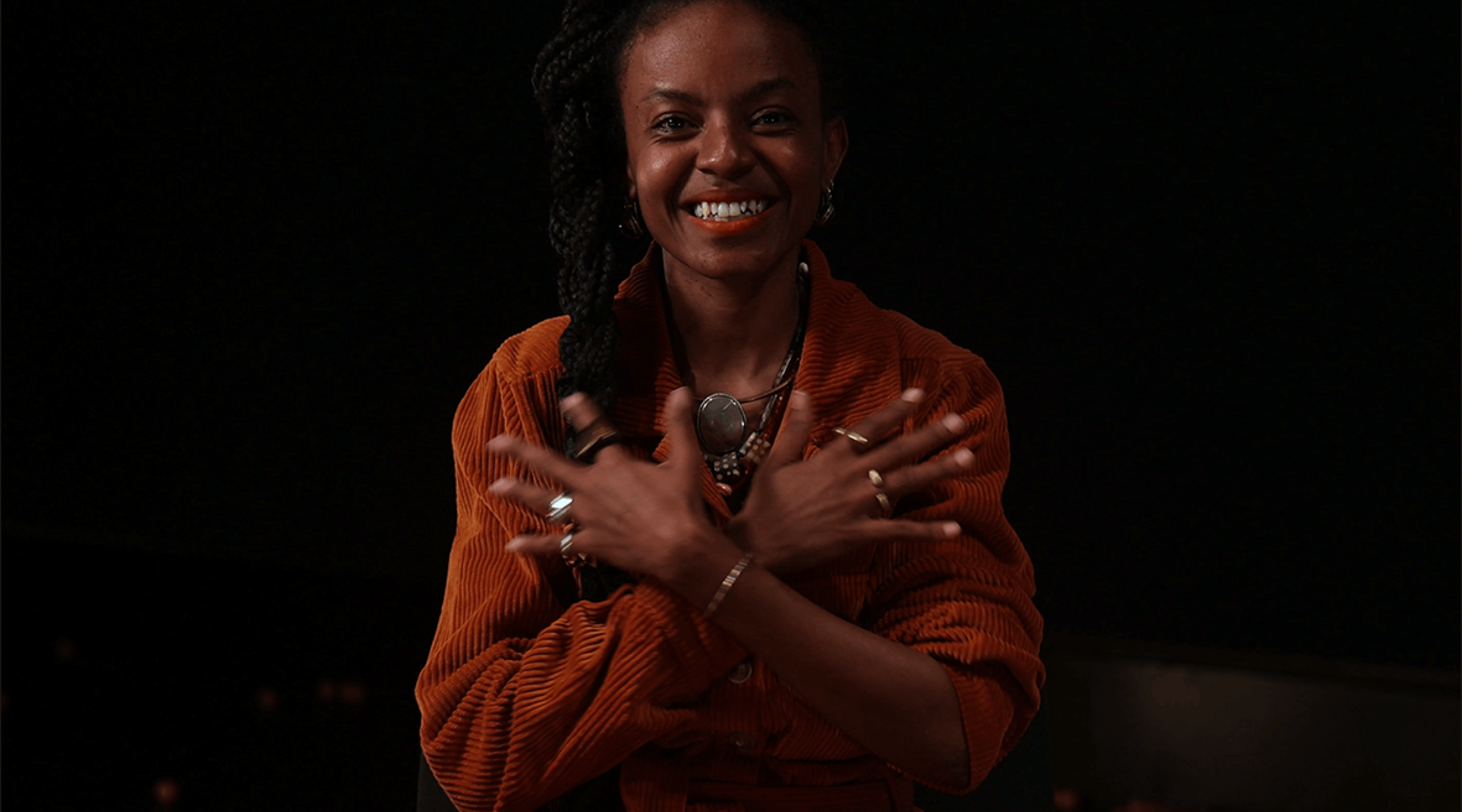
The title, Atomic Joy, poses the question of how joy can be an act of resistance. The dancers' facial expressions embody this when they take off their masks. They are smiling, but their eyes and body language read determined, almost defiant. This visual lands especially hard in the context of the one that precedes it, as the group, still masked, emulate a group of police officers raising their batons. I interpreted this as joy and community within the Afro-diaspora, despite living within racist systems that deem their bodies threatening or expendable.
The performance mixes elements of Afro-diasporic culture and history throughout. The music consists of African polyrhythms, but also references R&B music and hip-hop, while the choreography references Afro-diasporic dance styles such as tap dancing and vogueing, as well as samba and breakdancing. By weaving together these dance styles, the choreography reveals their shared history.
As the group moves through the space, they rarely follow the same choreography. They dance to different rhythms in the music, or break off into smaller groups. This references how Afro-diasporic communities have moved and scattered across the world, but still share culture and history.
There is one point where the group does come together in a line dance choreography, and it is joyous. I couldn't help but smile as the dancers connect, share each other’s energy and hype each other up.
While I really enjoyed the exposition of different dance styles and music throughout the piece, it did sometimes cause a disjointedness between scenes or different theatrical signs. Some parts, such as the heavy smoke, also confused me more than they helped with the storytelling. Still, I thought the visuals were very captivating, and the group moving together and splitting apart, to then be reunited again in different forms, was touching.
Atomic Joy shows joy as resistance by showing what must be defied. A world that is ignorant and dismissive at best, and violent at the worst. To create this atmosphere of community and joy is to resist this narrative, and instead imagine a different, more joyous reality and future.